Thursday, September 17, 2009

Love Rollercoaster


Song: Love Rollercoaster
Artist: Ohio Players
Album: Honey


So I've been listening to my last blogged-about song, Tommy Sparks' "She's Got Me Dancing" quite a bit, and yesterday I was listening and thought... man that bass line sounds familiar. And then it hit me... it really is reminiscent of the Ohio Players "Love Rollercoaster." I took a listen this morning, and while it's mildly different... it's only mildly. Take a listen below and tell me what you think. Many of you will probably remember the Red Hot Chili Peppers cover from the 90's.

I also didn't realize that "Love Rollercoaster" was part of an urban legend...

"Love Rollercoaster" is a song by American funk/R&B band The Ohio Players, originally featured on their 1975 albumHoney. The song was a hit upon its initial release, reaching the top of both the R&B and pop charts, and still sees wide airplay on classic funk and R&B stations. The song uses the roller coaster, a common theme park attraction, as a metaphor for the ups and downs of dating and romantic relationships.

Urban legend

While the song is known within the music community for its distinctive and influential sound, within the popular imagination it remains best identified with a persistent urban legend. During an instrumental portion of the song, a high-pitched scream is heard (between 2:32 and 2:36 on the single version); this was Billy Beck, but according to the most common legend, it was the voice of an individual being murdered live while the tape was rolling. The "victim's" identity varies greatly depending on the version. The supposed sources of the scream have included an individual who was killed at some prior time, her scream inexplicably recorded and looped into the track. Another version tells of a rabbit being killed outside the studio whose scream was accidentally picked up by the band's recording equipment - highly implausible, since professional recording studios are soundproof. The most widespread version of the myth, however, tells that Ester Cordet, who appeared nude on theHoney album cover, had been badly burned by the super-heated honey used for the photo shoot, which occurred simultaneous with the recording session, and her agonized screams were inadvertently captured on tape. A further variation had Cordet suffering permanent disfigurement due to the burns; she interrupted the band's recording session, threatening to sue, at which point the band's manager stabbed her to death in the control room. Both of the latter two scenarios, however, are impossible as Ester Cordet is still alive.

Casey Kasem reported the urban myth of the woman being killed in the studio recording booth on his radio show, American Top 40, when the song was on the charts in 1976.

Jimmy "Diamond" Williams explained that the scream was nothing eerie or disturbing:

“There is a part in the song where there's a breakdown. It's guitars and it's right before the second verse and Billy Beck does one of those inhaling-type screeches like Minnie Riperton did to reach her high note or Mariah Carey does to go octaves above. The DJ made this crack and it swept the country. People were asking us, 'Did you kill this girl in the studio?' The band took a vow of silence because you sell more records that way.”


Red Hot Chili Peppers cover

"Love Rollercoaster"
Single by Red Hot Chili Peppers
from the album Beavis and Butt-Head Do America Soundtrack
Released1996
FormatCD
Recorded1996
GenreFunk rock
LabelGeffen Records
ProducerRick Rubin
Red Hot Chili Peppers singles chronology
"Shallow Be Thy Game"
(1996)
"Love Rollercoaster"
(1996)
"Scar Tissue"
(1999)
Beavis and Butthead Do America Soundtrack track listing
"Two Cool Guys"
(1)
"Love Rollercoaster"
(2)
"Ain't Nobody"
(3)

"Love Rollercoaster" was covered by the Red Hot Chili Peppers in 1996, with lead singer Anthony Kiedis adding a rap to the song, and the horn section replaced with an approximation played on kazoos. Their version appeared on the soundtrack of the animated film Beavis and Butt-head Do America. There was also an animated music video that was made for the song, featuring Beavis, Butt-head, and the band riding an amusement park roller coaster, intercut with scenes from the film. The song is played early in the movie itself, when Beavis and Butt-head arrive in Las Vegas. In the dance hall scene, a fictional funk band is shown performing the song live (the one appearing on the background of the single cover).

Track listing

CD Single 1
  1. "Love Rollercoaster"
  2. "Lesbian Seagull - Engelbert Humperdinck"
CD Single 2
  1. "Love Rollercoaster" (Clean Edit)
  2. "Love Rollercoaster" (Rock Rollercoaster Mix)
  3. "Love Rollercoaster" (LP Version)

In the media

The song was featured briefly in the film Urban Legend, where a reference is made to the myth associated with it.

It makes a more prominent appearance in the third Final Destination film, where the song is played as death stalks and manifests itself to kill two teenage girls tanning in a tanning salon. This use is a dual reference used as a "sign" in the film citing the metaphoric legend of that song is known for, and the literal rollercoaster which plays an important deadly role in the film.

The song was also featured in the movie After The Sunset. The song was played during a point when an FBI agent was locked in his car and the "villans" were flooding the car with sleeping gas.

This song was used in the Nickelodeon series The Adventures of Pete & Pete during a band scene.

The song was also in an episode of the Bernie Mac show during the scene where Jordan was having his party and the kids were passing germs along the way.

This song is played in the movie Johnson's Family Vacation, when the family is being stalked by a Pampers Semi-Truck.

A cover version of the song, based on the Red Hot Chili Peppers version, is featured in the Nintendo Wii game Boogie. Some of the more sexually suggestive lyrics were changed.

The song was sampled by Rodney O & Joe Cooley in their 1991 song Get Ready to Roll.

The original version featured on the 2004 video game Grand Theft Auto: San Andreas soundtrack on the game's funk radio station Bounce FM.

The Ohio Players' version was used in a Suzuki Jimny advert during the mid 2000s.

The Ohio Players are a funk and R&B band. They are best known for their hit songs "Fire" and "Love Rollercoaster".

Biography

The band formed in Dayton, Ohio in 1959 as the Ohio Untouchables, and initially included members Robert Ward(vocals/guitar), Marshall "Rock" Jones (bass), Clarence "Satch" Satchell (saxophone/guitar), Cornelius Johnson (drums), and Ralph "Pee Wee" Middlebrooks (trumpet/trombone). The Ohio Untouchables broke up in 1963 with Ward leaving for a solo career, but the core members of the group returned to Dayton and added Gregory Webster (drums) and Leroy "Sugarfoot" Bonner (guitar) in 1964. The group added two more singers, Bobby Lee Fears and Dutch Robinson, and became the house band for New York City-based Compass Records in 1967. They soon became one of the better known R&B bands of the 1970s. Their song "Runnin' from the Devil" inspired the Van Halen song "Runnin' With the Devil".

The group disbanded again in 1970. After again reforming with a line-up including Bonner, Satchell, Middlebrooks, Jones, Webster, trumpeter Bruce Napier, trombonist Marvin Pierce, and keyboardist Walter "Junie" Morrison, the Players had a minor hit on the Detroit-based Westbound label in 1971 with "Pain" which reached the Billboard R&B Top 40. Detroit vocalist Dale Allen shared co-lead vocals on some of the early Westbound material, although not credited on the albums "Pain" and "Pleasure".

The band’s first big hit was "Funky Worm", which hit #1 on the Billboard R&B Charts and made the pop Top 15 in May1973. The band signed with Mercury Records in 1974. By this time, their lineup had changed again, with keyboardist Billy Beck instead of Morrison and Jimmy "Diamond" Williams on drums instead of Webster. On later album releases, they added second guitarist/vocalist Clarence 'Chet' Willis and conga player Robert "Rumba" Jones to the lineup. Bonner sang lead vocals on most of the band's hits.

The band had seven Top 40 hits between 1973 and 1976, including "Fire" (#1 on both the R&B and pop charts for two weeks and one week respectively in February 1975) and "Love Rollercoaster" (#1 on both the R&B and pop charts for 1 week in January 1976). The group's last big hit was "Who'd She Coo?" a #1 R&B hit in August 1976.

The band became widely known not only for their sound, which has been sampled and copied by countless R&B and hip-hop artists since, but for their sexually provocative album covers, including the cover of 1974's Ecstasy, which featured a man and a woman in a pose of arousal wearing chains and leather, and 1975's Honey, which featured a nude woman holding an overflowing jar of honey and dropping some into her mouth with a ladle.

There is an urban legend that has it that a scream on "Love Rollercoaster" that came during the break after the second verse was the sound of someone being murdered in the studio while the track was being recorded. It is widely believed to be the scream of a female model (the nude woman Ester Cordet featured on the image for the Honey album) after being stabbed with a knife by the band's manager. She was complaining that the honey and fibre glass she was sitting on reacted when mixed causing permanent damage to her legs during the image photography, ending her modelling career. She then approached the manager seeking compensation during the recording of "Love Rollercoaster" only to be stabbed and attacked. The Ohio Players then left the scream in as a sick tribute.

The band did not discredit this rumor at the time, because, as one band member put it later, "that makes you sell more records." This is just an urban legend however, as are any other disturbing explanations, including a person murdered outside the recording studio (although recording studios are soundproof and the scream would not have been heard), a band member murdering his girlfriend or a cleaning woman in the recording studio, or a real scream taken from a 911 call or a Psychiatric ward.

Marshall Jones (4 October 1942 - 18 August 1984) died. Clarence Satchell (15 April 1940 - 30 December 1995) died after he had a brain aneurysm. Ralph Middlebrooks (b. 20 August 1939) died in November 1997.

The Red Hot Chili Peppers were one of the bands heavily influenced by the Ohio Players, covering "Love Rollercoaster" for the film Beavis and Butt-head Do America. In the UK, there was a chain of music and DVD stores named after one of their hit songs, "Fopp". "Fopp" was also covered by Soundgarden for an EP called Fopp.

Enjoy.

Love Rollercoaster (live) - Ohio Players

Love Rollercoaster - Red Hot Chili Peppers

She's Got Me Dancing - Tommy Sparks

Tuesday, September 15, 2009

She's Got Me Dancing


Song: She's Got Me Dancing
Artist: Tommy Sparks
Album: Tommy Sparks


One of my favorite things about life is the way music can jump into your lap anytime, anywhere, and then create new moments for you in the future. I recently heard this infectious song at work as used in a sizzle reel and could not get it out of my head. I did some looking and found out it was Sweden's Tommy Sparks, a new wave artist. It turns out the song was featured in an iPod ad... and knowing that it sounds JUST like something in an iPod ad. Oh well. Haven't listened to the whole new record yet, but this song is great.

Tommy Sparks is a fusion/pop/alternative musician born in Stockholm, Sweden who currently lives in Kilburn, United Kingdom. He is known for his songs "She's Got Me Dancing" and "I'm a Rope". His self-titled album is due out on 11 May 2009 in the United Kingdom. He co-wrote The Prodigy song "Wild West" featured on the bonus disc for Invaders Must Die.[1] He also features on the Filthy Dukes album Nonsense in the Dark on the song "Messages".

An instrumental clip of "She's Got Me Dancing" was used by Apple in the iPod touch 3G television commercial.


Tommy Sparks is the self-titled debut studio album from the musician Tommy Sparks. It contains 10 tracks written by Tommy Sparks and produced by Mike Crossey. It was released through Island Records on May 11, 2009 in the United Kingdom. The album features his singles "I'm A Rope" and "She's Got Me Dancing". The single "Miracle" is due for release in August.

Track listing

#TitleLength
1."Much Too Much" 3:24
2."She's Got Me Dancing" 3:29
3."These Things Happen" 3:30
4."Miracle" 3:08
5."Brand New Love" 3:33
6."I'm A Rope" 2:19
7."Kill The Summer" 4:04
8."Velo Arktis" 3:31
9."Hammer"
10."Health Club" 3:52
11."Weekend's Over" 3:16
12."Messages" (featuring Filthy Dukes)3:20

Music Videos

  • "I'm a Rope"

Director: Max Vitali

  • "She's Got Me Dancing"

Director: Eric Wareheim

Enjoy.

She's Got Me Dancing

I'm On a Rope


Monday, September 14, 2009

Rush


Song: Rush
Artist: Big Audio Dynamite II
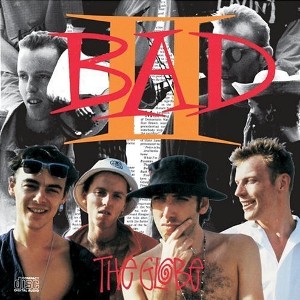
Album: The Globe


"Rush" is a song by Big Audio Dynamite II from their album The Globe. It was a number-one hit on the Billboard Modern Rock Tracks chart for four weeks in 1991.

In the UK, "Rush" was released as the B-side to the 1991 re-release of "Should I Stay or Should I Go". The A-side was immensely popular due to its inclsuion in a Levi Strauss & Co. advert. The single reached number 1 on the UK Singles Chart. The sleeve art for the 7" single displayed the Clash on the front, and BAD II on the rear. The record label displays "Should I Stay or Should I Go" as side 'A', and "Rush" as side 'AA'. The release was effectively a 'Double A-side' release.

The "New York City Club Version" remix of "Rush" was featured in the 1993 Mike Myers' film So I Married an Axe Murderer.

The song samples several other songs including the keyboard component of The Who's song "Baba O'Riley," the opening samples the opening of the Deep Purple song "Child in Time" and a line from The Sugarhill Gang's song "Rapper's Delight" where Big Bank Hank raps "a time to laugh, a time to cry."


Big Audio Dynamite (later known as Big Audio Dynamite II and Big Audio, and often abbreviated BAD) were a British musical group formed in 1984 by the ex-guitarist and singer of The Clash, Mick Jones. The group were noted for their effective mixture of varied musical styles, incorporating elements of punk rock, dance music, hip hop, reggae, and funk. BAD's one constant throughout frequent shifts in membership and musical direction was the vocals provided by Mick Jones.


History

Big Audio Dynamite (1984–1990)

The group's initial incarnation, founded by Jones and film director Letts (maker of The Punk Rock Movie, various Clash music videos, and later The Clash documentary Westway to the World), debuted with the 1985 release This Is Big Audio Dynamite. The album's cover shows the group as a four-piece (minus Donovan); the full group is pictured on the back cover.

1986's No. 10, Upping St. reunited Jones for one album with former Clash band-mate Joe Strummer, who was a co-producer of the album and co-writer of a number of its songs. BAD supported U2 on their 1987 world tour, then released 1988'sTighten Up, Vol. '88 and 1989's Megatop Phoenix. Tighten Up, Vol. 88 contained "Just Play Music!", which was the second #1 single on Billboard's Modern Rock Tracks. The band also recorded an unreleased track called "Keep Off the Grass" which was a rock-style instrumental of the theme to the classic western film, The Magnificent Seven. A promo video can be seen on YouTube.

In 1990, the original line-up wrote and recorded the song "Free" for the soundtrack to the movie Flashback. This would be the final song written with the original lineup, as the band would dissolve shortly after. Later in 1990, Mick Jones would debut Big Audio Dynamite II and release the UK only album Kool-Aid. Dan Donovan would remain in BAD II for one song, a re-working of the final BAD track "Free" renamed "Kickin' In".

Big Audio Dynamite II (1991–1993)

For 1991's The Globe, only Jones remained from BAD, and the band was now called Big Audio Dynamite II. This new line-up, featuring two guitarists, was more "Clash-like" and, possibly as a result, often played more alternative rock-influenced music. The Globe featured the band's most commercially successful single, "Rush" which hit #1 on the US modern rock charts. "Innocent Child" and "The Globe" were also released as singles. BAD supported U2 on their ZooTV tour and released the live ep "On The Road Live '92".

Big Audio (1994)

The band later recruited keyboardist Andre Shapps (co-producer of The Globe) and Michael "DJ Zonka" Custance as DJ and vocalist. Both appeared on the band's 1994 album Higher Power, which was released under the shortened name "Big Audio,". The album wasn't as well-received as The Globe or previous BAD albums.

After signing with Gary Kurfirst's Radioactive Records in 1995, the band released their least successful album, F-Punk to date, which (despite the same personnel asHigher Power) was credited to Big Audio Dynamite.

Post-1995

Radioactive Records refused to release the next proposed BAD album, Entering a New Ride. The line-up contained vocalist Ranking Roger (The Beat,General Public). In 1998, the band launched a new web site, primarily as a means to distribute songs from the Entering a New Ride album.

As of 2005, Jones is working on a project with Tony James (ex-member of Generation X and Sigue Sigue Sputnik) called Carbon/Silicon.

In early 2007, a BAD II live DVD was released.

Personnel

Big Audio Dynamite (1984 - 1990)

Big Audio Dynamite II (1991-1993)

Big Audio (1994)

  • Mick Jones - guitar and vocals
  • Nick Hawkins - guitar and background vocals
  • Gary Stonadge - bass and background vocals
  • Chris Kavanagh - drums and background vocals
  • Andre Shapps - keyboards
  • Michael 'Zonka' Custance - DJ, percussion and background vocals

Post-1995

  • Mick Jones - guitar and vocals
  • Andre Shapps - keyboards
  • Darryl Fulstow - bass (1996 - 1998)
  • Bob Wond - drums (1996 - 1998)
  • Ranking Roger - vocals (1996 - 1998)

Discography

Albums

YearTitleChart Positions
U.K[2][3]U.S.AUS
1985This is Big Audio Dynamite
  • Release Date: October 1985
  • Label: CBS Records
  • Notes: Group credited as 'Big Audio Dynamite'
27103–
1986No. 10, Upping St.
  • Release Date: October 1986
  • Label: CBS Records
  • Notes: Group credited as 'Big Audio Dynamite'
11135–
1988Tighten Up, Vol. 88
  • Release Date: June 1988
  • Label: CBS Records
  • Notes: Group credited as 'Big Audio Dynamite'
33102–
1989Megatop Phoenix
  • Release Date: 5 September 1989
  • Label: CBS Records
  • Notes: Group credited as 'Big Audio Dynamite'
2685–
1990Kool-Aid
  • Release Date: 1 November 1990
  • Label: Columbia Records
  • Notes: Group credited as 'Big Audio Dynamite II', Limited Release
55––
1991The Globe
  • Release Date: 16 June 1991
  • Label: Columbia Records
  • Notes: Group credited as 'Big Audio Dynamite II', RIAA Gold Certified
617610
1994Higher Power
  • Release Date: 8 November 1994
  • Label: Columbia Records
  • Notes: Group credited as 'Big Audio'
–––
1995F-Punk
  • Release Date: 20 June 1995
  • Label: Radioactive Records
  • Notes: Group credited as 'Big Audio Dynamite'
–––
1997Entering a New Ride
  • Release Date: 1997
  • Label: Released on the Internet independently
  • Notes: Group credited as 'Big Audio Dynamite'
–––


Other information

  • Mick Jones was noted for playing a high-tech British-made guitar called the Bond Electraglide with BAD. It's worn by Mick Jones on the cover of No. 10 Upping St.
  • During the 1980s, "The Bottom Line" was used as the music for the opening credits to "Sports Sunday", a weekly sports magazine TV show shown on the Nine Network, an Australian television station.


Enjoy.

Rush


The Globe